
New · Trench Safety Division
Trench safety equipment rental
St‑Zoutils expands with its Trench Safety Division: trench boxes, hydraulic shores, road plates and the equipment that makes an excavation safe, for rent in Saint-Zotique and Île-Perrot.
A division built for excavation contractors and civil engineering professionals, for large projects and one-off jobs alike. Trench Safety Division, a new solution from St‑Zoutils.
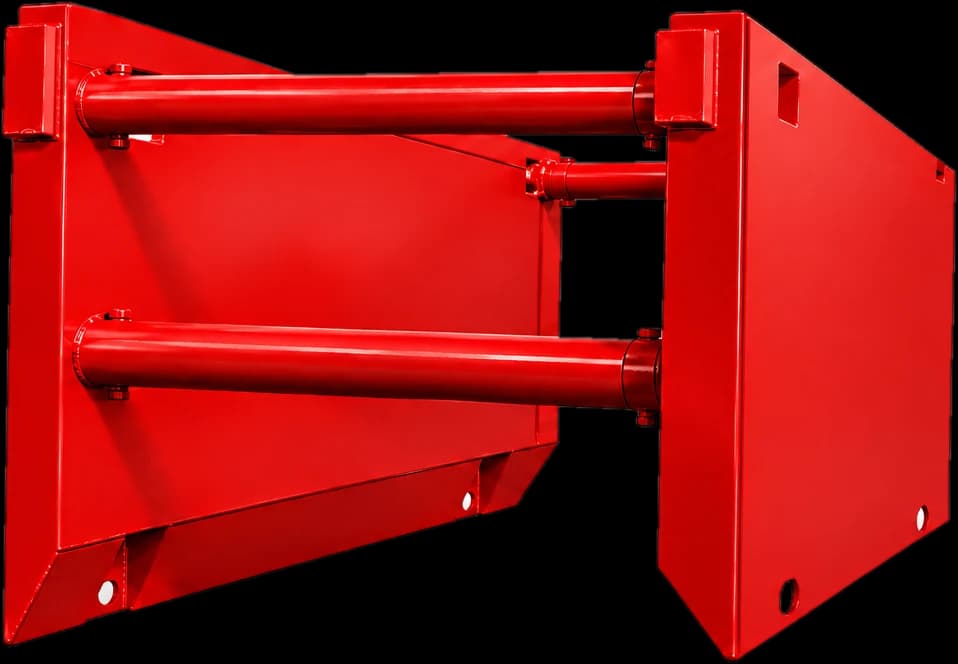
From 1.2 m of vertical wall, shoring is mandatory, with exceptions.
Trench safety engineering
To keep your excavation work safe, we offer an engineering service specialised in trench safety. Our solutions let you plan and secure your excavations for the specific conditions of your site, so you work in a compliant and safe environment.
The equipment
Six families of equipment, for rent, to shore, cover, plug and handle material on a trench site.
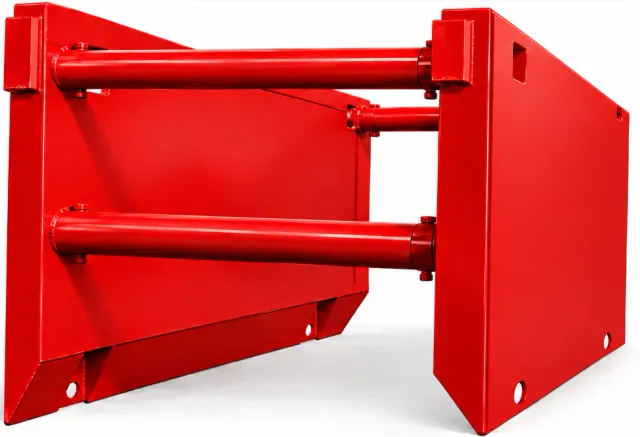
Steel trench box
Steel trench box for rent, 4′ to 10′ high and 10′ to 32′ long, with 4′ to 20′ spreader bars. Saint-Zotique and Île-Perrot.
- Material: Acier
- Height: 4 à 10 pi
- Length: 10 à 32 pi
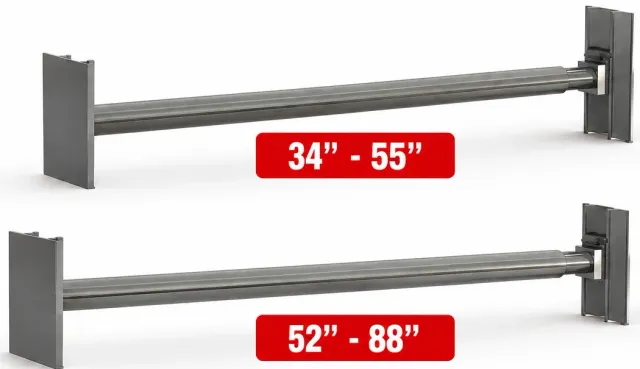
Hydraulic shores
Hydraulic shores for rent for trench shoring, 34″ to 55″ and 52″ to 88″ spreads, with hand pumps and release tools.
- Spread (short model): 34 à 55 po
- Spread (long model): 52 à 88 po
- Release tools: 48 à 72 po
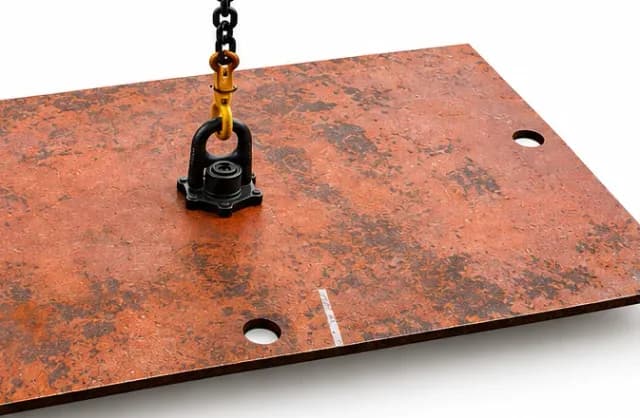
Steel road plate
One-inch 50W steel road plates for rent, 4′ × 8′ to 10′ × 20′, with a lifting ring, to cover a trench and reopen traffic.
- Thickness: 1 po
- Steel grade: 50W
- Lifting ring: Disponible
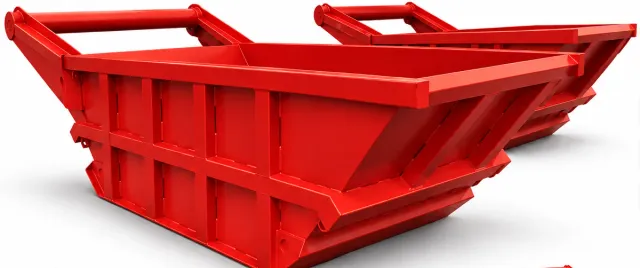
Stone box
Steel stone boxes for rent, 7, 9 and 12 cubic yards, to handle crushed stone on an excavation site.
- Capacities: 7, 9, 12 vg³
- Material: Acier
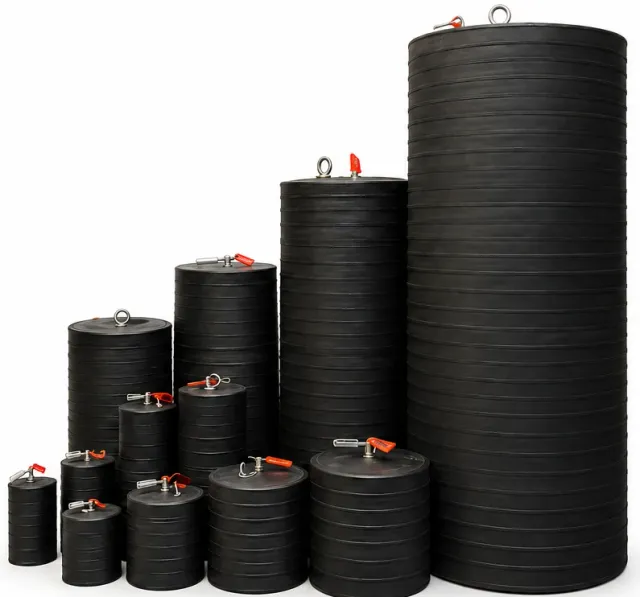
Pipe plugs
Inflatable pipe plugs for rent, with or without bypass, in five sizes, with a 30′ inflation hose and gauge.
- Available sizes: 4 à 8, 7 à 12, 9 à 16, 13 à 24, 19 à 36 pi
- Bypass: Avec ou sans
- Inflation hose: 30 pi
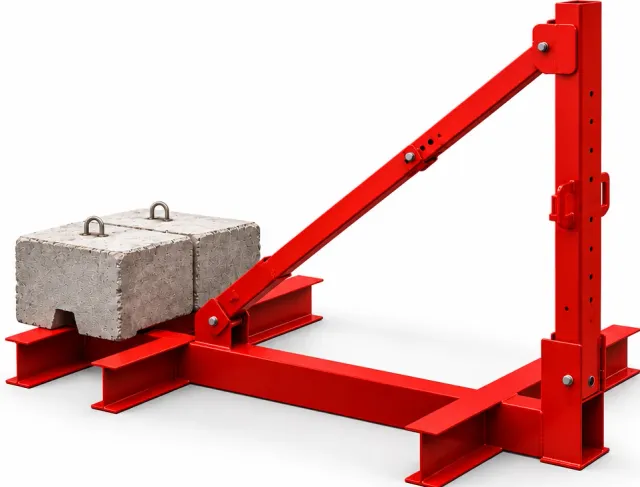
Pole support with concrete blocks
Pole support for rent, weighted with concrete blocks, to keep a utility pole stable when excavating near its base.
- Counterweight: Blocs de béton
- Frame: Acier
Trench boxes: 30 formats
Panel height by length. Spreader bars from 4′ to 20′ then set the trench width.
| Height | 10′ | 12′ | 16′ | 20′ | 24′ | 27′ | 28′ | 30′ | 32′ |
|---|---|---|---|---|---|---|---|---|---|
| 4′ | 4′ × 10′, Not available | 4′ × 12′, Available | 4′ × 16′, Available | 4′ × 20′, Available | 4′ × 24′, Available | 4′ × 27′, Available | 4′ × 28′, Available | 4′ × 30′, Available | 4′ × 32′, Available |
| 6′ | 6′ × 10′, Not available | 6′ × 12′, Not available | 6′ × 16′, Available | 6′ × 20′, Available | 6′ × 24′, Available | 6′ × 27′, Available | 6′ × 28′, Available | 6′ × 30′, Not available | 6′ × 32′, Not available |
| 8′ | 8′ × 10′, Available | 8′ × 12′, Available | 8′ × 16′, Available | 8′ × 20′, Available | 8′ × 24′, Available | 8′ × 27′, Available | 8′ × 28′, Available | 8′ × 30′, Available | 8′ × 32′, Not available |
| 10′ | 10′ × 10′, Available | 10′ × 12′, Available | 10′ × 16′, Available | 10′ × 20′, Available | 10′ × 24′, Available | 10′ × 27′, Available | 10′ × 28′, Available | 10′ × 30′, Available | 10′ × 32′, Available |
What the code says
In Québec, the construction safety code (CSTC) governs every excavation. These are the rules that decide which equipment to rent.
S. 3.15.3.1
Shore to an engineer’s plans
Trench walls are shored to an engineer’s plans and specifications. Three exceptions: digging in sound rock, walls sloped under 45° from less than 1.2 m above the bottom, or an engineer attesting that shoring is not needed.
S. 3.15.3.5
Keep loads back from the edge
Excavated material is placed more than 1.2 m from the top of the walls, and vehicles and machines travel or park more than 3 m away.
S. 3.15.3.3 and 3.15.3.6
As you go, and bottom up
Shoring goes in as the digging advances and comes out from the bottom up, never the other way round.
Public roads
Cover to reopen traffic
Shoring must extend 300 mm above the excavation, except for a trench on a public road that is covered to restore traffic. That is what road plates are for.
Trench equipment: frequently asked questions
- From what depth must a trench be shored in Québec?
- The construction safety code (s. 3.15.3.1) requires trench walls to be shored to an engineer’s plans. There is no obligation when digging in sound rock, when the walls are sloped under 45° from less than 1.2 m above the bottom, or when an engineer attests that it is not needed.
- Do you offer trench safety engineering?
- To keep your excavation work safe, we offer an engineering service specialised in trench safety. Our solutions let you plan and secure your excavations for the specific conditions of your site, so you work in a compliant and safe environment.
- Which trench box should I choose?
- Panel height follows the trench depth, length follows the run of pipe to lay, and spreader bars set the width. Our boxes run from 4′ to 10′ high and 10′ to 32′ long, with 4′ to 20′ spreads. An advisor confirms the format for your site.
- Can a trench be covered to reopen traffic?
- Yes. The code provides for this on a public road. Our 1-inch grade 50W steel road plates, from 4′ × 8′ to 10′ × 20′, cover the trench, and their lifting ring lets the excavator move them.
- Do I need authorisation to dig near a Hydro-Québec pole?
- Yes. Any work on a Hydro-Québec pole must be authorised by Hydro-Québec beforehand. The pole support, weighted with concrete blocks, keeps the pole stable during the excavation once the authorisation is in hand.
- What is the difference between a trench box and hydraulic shores?
- A trench box is a steel cage that protects a work space and moves along as the job advances. Hydraulic shores hold the walls of a narrow trench by pressure, are set from the surface and are removed the same way.
- Do you deliver trench equipment to the job site?
- Yes. We deliver to the job site, and both branches, Saint-Zotique and Île-Perrot, rent the Trench Safety Division equipment.
- How do I get a price?
- Add the equipment to your request from the catalogue with your dates. An advisor calls back, confirms availability and sends the quote. Nothing is paid online.
Planning an excavation job?
Tell us the depth, width and length of the trench. An advisor proposes the equipment and sends the quote.